
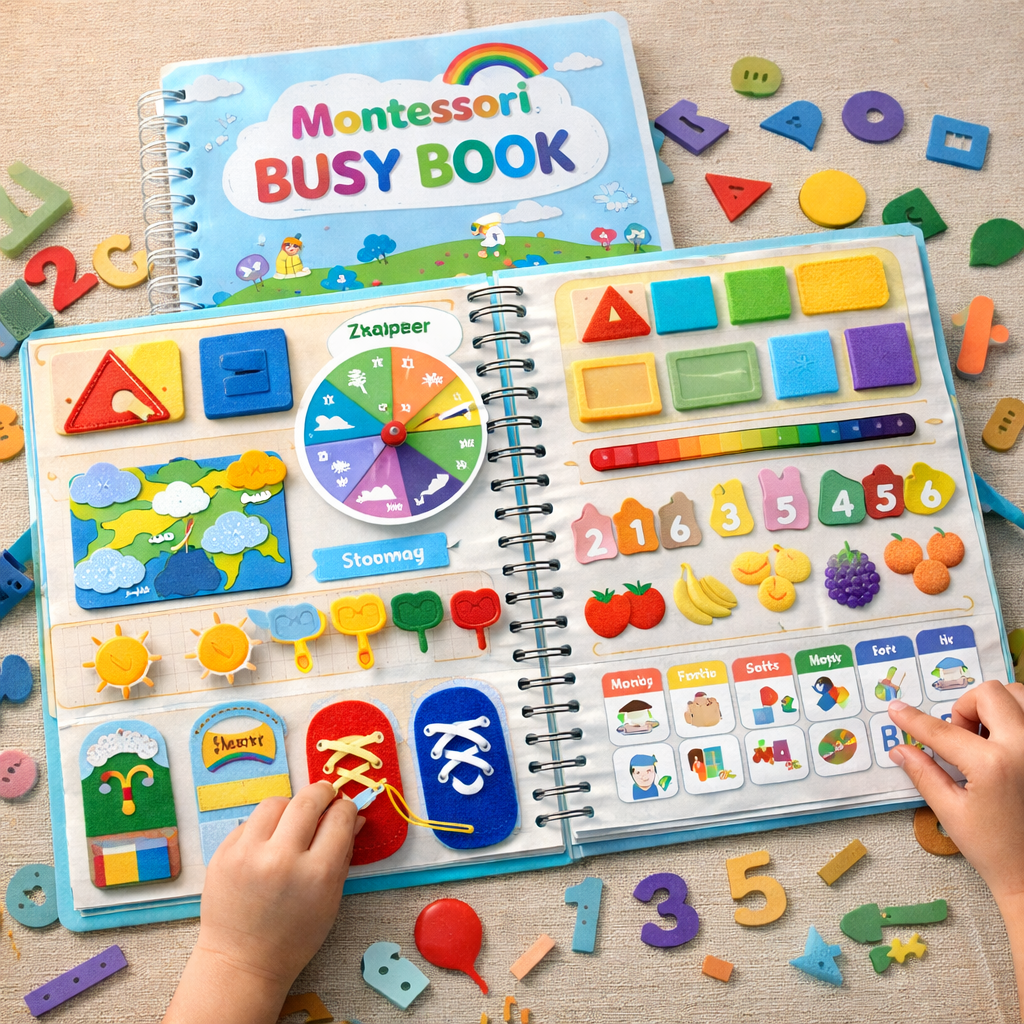
Early childhood education plays a vital role in shaping how children explore, learn, and interact with the world around them. Parents and educators are constantly searching for tools that encourage creativity, independence, and hands-on learning. One such educational resource that has gained popularity in recent years is the Montessori busy book.
Inspired by the teaching principles of Maria Montessori, these interactive books provide engaging activities designed to stimulate a child’s curiosity and cognitive development. A Montessori busy book combines play and learning in a way that supports early development while keeping children entertained.
From teaching basic life skills to introducing foundational academic concepts, these books offer a unique and effective learning experience for toddlers and preschool-aged children.
What Is a Montessori Busy Book?
A Montessori busy book is an interactive educational book that includes hands-on activities designed to help young children develop essential skills. These books typically contain colorful pages filled with puzzles, matching games, sorting tasks, and sensory-based exercises.
Unlike traditional storybooks, busy books focus on participation rather than passive reading. Children actively interact with the materials by attaching pieces with Velcro, tracing shapes, sorting objects, or completing simple puzzles.
The concept aligns with the educational philosophy developed by Maria Montessori, which emphasizes learning through exploration and practical activities. By encouraging children to engage with materials directly, Montessori busy books help strengthen both cognitive and motor skills.
Principles of Montessori Learning
The popularity of the Montessori busy book stems from the principles of Montessori education. This educational approach focuses on fostering independence, creativity, and natural curiosity in children.
One key principle is learning through hands-on experience. Rather than memorizing information, children interact with objects and activities that allow them to discover concepts on their own.
Another principle involves child-centered learning. Activities are designed to match a child’s developmental stage, allowing them to learn at their own pace.
Finally, Montessori education encourages practical life skills. Many busy book activities include tasks that mimic real-world actions such as buttoning, tying, or sorting objects. These exercises help children develop coordination and independence.
Educational Benefits of Montessori Busy Books
A well-designed Montessori busy book offers several educational advantages for young learners. One of the most important benefits is improved fine motor development. Activities that involve picking up small pieces, attaching Velcro shapes, or tracing letters help strengthen the muscles in a child’s hands and fingers.
Cognitive development is another major benefit. Matching games, counting exercises, and sorting tasks encourage logical thinking and problem-solving skills.
Busy books also support language development. Activities involving letters, colors, and shapes introduce basic vocabulary and early literacy concepts in an engaging way.
In addition, these books encourage concentration and focus. Because children must actively complete tasks, they learn to pay attention and persist until the activity is finished.
Types of Activities Found in Montessori Busy Books
A Montessori busy book may contain a variety of activities designed to address different developmental skills. Many books include shape and color matching games that help children recognize patterns and visual differences.
Alphabet activities are also common. Children may match uppercase and lowercase letters or place letters in the correct order to form simple words.
Counting exercises introduce basic math skills by encouraging children to match numbers with objects or arrange items in numerical order.
Practical life activities are another important feature. Some busy books include tasks such as buttoning fabric pieces, tying shoelaces, or sorting everyday objects. These activities mimic real-life tasks and help build independence.
Supporting Independent Learning
One of the defining features of a Montessori busy book is its ability to support independent learning. The activities are usually simple enough for children to complete on their own once they understand the instructions.
This independence helps build confidence and encourages children to take responsibility for their learning. Instead of relying on constant adult guidance, children explore and solve problems independently.
Parents and teachers can still provide encouragement and support, but the child remains the primary participant in the learning process.
Benefits for Parents and Educators
Montessori busy books are not only beneficial for children but also helpful for parents and educators. These books provide structured activities that can keep children engaged during travel, quiet time, or independent play sessions.
For parents, a busy book offers an educational alternative to screen-based entertainment. Instead of spending time on digital devices, children can participate in activities that promote creativity and learning.
Teachers and early childhood educators also find these books useful in classroom settings. They can be used during individual learning sessions, small group activities, or skill-building exercises.
Choosing the Right Montessori Busy Book
Selecting the right Montessori busy book depends on a child’s age, interests, and developmental stage. Younger toddlers may benefit from books that focus on basic skills such as colors, shapes, and simple matching games.
Older preschool children may enjoy more complex activities involving numbers, letters, and problem-solving tasks.
Quality materials are also important. Durable pages, safe components, and well-designed activities ensure that the book can withstand frequent use while remaining safe for young learners.
Parents should also look for books that encourage creativity and open-ended exploration rather than rigid instructions.
Conclusion
The Montessori busy book has become a popular educational tool for supporting early childhood development. By combining interactive activities with the principles of Montessori education, these books provide an engaging and effective way for children to learn through play.
Inspired by the teachings of Maria Montessori, busy books encourage independence, creativity, and hands-on exploration. Through activities that develop fine motor skills, cognitive abilities, and early literacy concepts, children gain valuable experiences that support their growth.
For parents and educators seeking meaningful educational tools, Montessori busy books offer a practical and enjoyable solution. By turning learning into an interactive adventure, these books help children build skills, confidence, and curiosity that will benefit them throughout their educational journey.
