
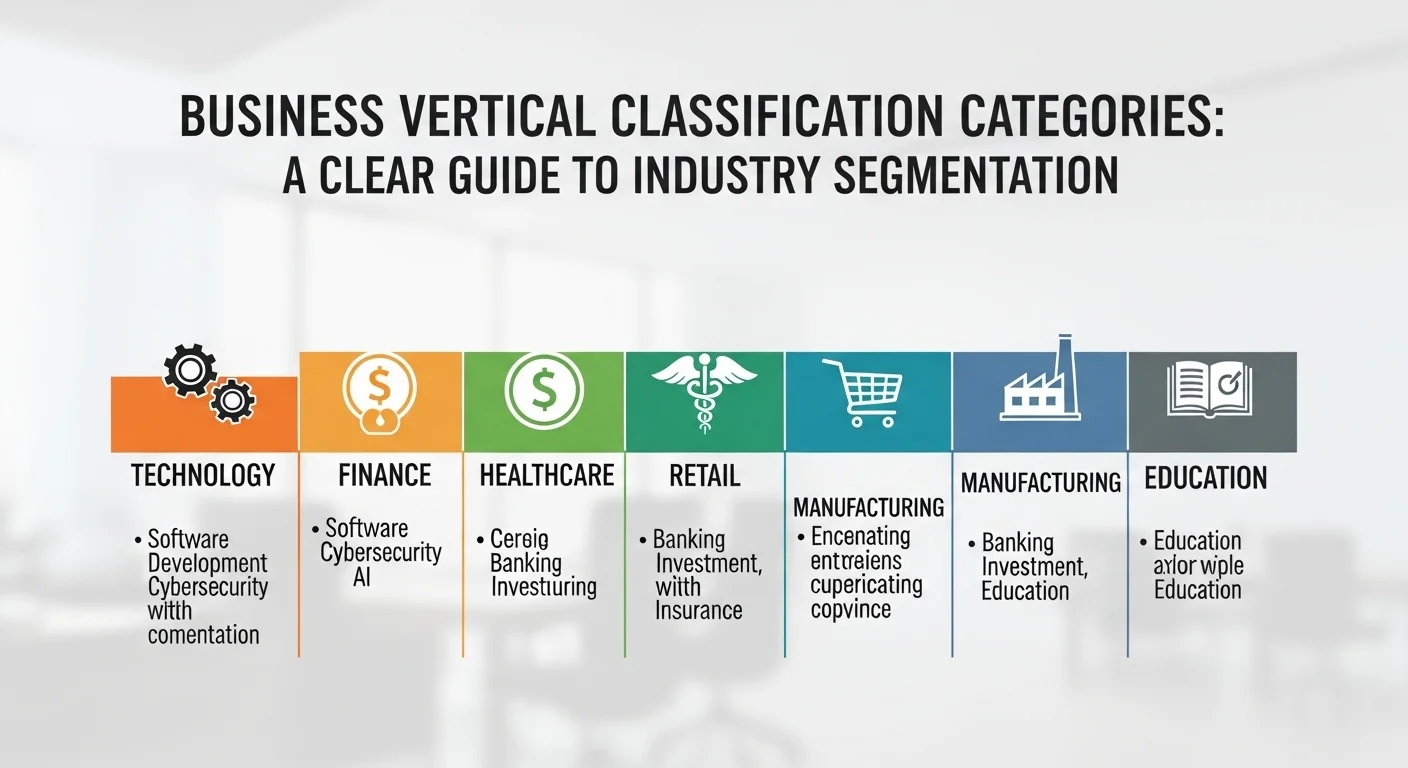
The retail industry continues to evolve rapidly, driven by digital transformation, shifting consumer behavior, and global market expansion. As competition intensifies, businesses must understand how retail operations are categorized and structured. One of the most important concepts in this context is retail business vertical classification. This framework helps define how retail companies are grouped based on industry focus, product specialization, and market segment.
Understanding retail business vertical classification is essential for entrepreneurs, investors, marketers, and analysts who want to identify opportunities, analyze competition, and build targeted growth strategies. In 2026, with the expansion of e-commerce and niche retail markets, vertical classification has become more relevant than ever.
What Is Retail Business Vertical Classification?
Retail business vertical classification refers to the structured categorization of retail businesses based on the type of products or services they sell within a specific industry segment. Instead of grouping businesses broadly under “retail,” this classification system divides them into specialized verticals.
A vertical market focuses on a specific industry or product category, while a horizontal market spans multiple industries. In retail, vertical classification allows companies to define their niche more clearly and tailor their strategies accordingly.
For example, clothing retail, electronics retail, grocery retail, and home improvement retail represent different vertical classifications within the broader retail industry.
Why Retail Vertical Classification Matters in 2026
As the retail landscape becomes more competitive, understanding vertical segmentation provides several advantages:
- Improved market positioning
- Better audience targeting
- More accurate competitor analysis
- Focused marketing campaigns
- Streamlined inventory management
In 2026, consumers expect personalized experiences. Retailers operating within a clearly defined vertical can better understand customer preferences and deliver tailored solutions.
Major Retail Business Vertical Categories
Retail businesses can be classified into several primary verticals based on product specialization and industry focus.
1. Apparel and Fashion Retail
This vertical includes businesses selling clothing, footwear, and fashion accessories. It covers luxury brands, fast fashion retailers, and niche clothing boutiques. Fashion retail remains one of the most competitive and innovation-driven sectors.
2. Grocery and Food Retail
Grocery stores, supermarkets, specialty food shops, and organic markets fall into this classification. This vertical focuses on essential consumer goods and perishable products, often requiring strong supply chain management.
3. Electronics and Technology Retail
Retailers specializing in gadgets, appliances, and technology products belong to this category. This vertical frequently evolves due to rapid technological advancements and product innovation.
4. Health and Beauty Retail
This segment includes cosmetics, skincare products, personal care items, and wellness-related goods. The rise of online beauty marketplaces has significantly expanded this vertical.
5. Home and Furniture Retail
Businesses selling furniture, décor, home appliances, and improvement materials are classified under this vertical. It often involves both physical showrooms and e-commerce platforms.
6. Automotive Retail
Automotive retail includes car dealerships, spare parts retailers, and vehicle accessory stores. This vertical requires specialized knowledge and compliance with industry regulations.
7. Specialty Retail
Specialty retailers focus on niche markets such as sports equipment, pet supplies, books, or hobby-related products. These businesses often build strong brand loyalty within specific communities.
Vertical vs. Horizontal Retail Models
Understanding the difference between vertical and horizontal retail models is crucial when discussing retail business vertical classification.
A vertical retail model focuses on a specific product category or industry segment. It serves a defined customer group with specialized needs. For example, a retailer that sells only sports equipment operates within a vertical market.
A horizontal retail model, on the other hand, offers a wide range of unrelated products across multiple industries. Large department stores often follow a horizontal approach.
Vertical classification allows businesses to concentrate resources on expertise and differentiation, while horizontal models prioritize diversity and volume.
Impact of E-Commerce on Vertical Classification
Digital transformation has significantly influenced how retail businesses are classified. Online platforms enable niche retailers to reach global audiences without the limitations of physical store space.
In 2026, e-commerce has strengthened vertical retail by allowing businesses to specialize deeply within a specific segment. For example:
- Online-only fashion brands
- Digital health product marketplaces
- Niche electronics e-commerce stores
This digital expansion makes retail business vertical classification more important for SEO, digital marketing, and targeted advertising.
Benefits of Clear Vertical Positioning
A clearly defined retail vertical offers multiple strategic benefits:
Stronger Brand Identity
Specialization helps businesses build authority within their niche.
Better Customer Targeting
Marketing campaigns become more precise when tailored to a specific audience.
Improved Operational Efficiency
Inventory, supplier relationships, and logistics can be optimized for a focused product category.
Enhanced Competitive Advantage
Vertical retailers often outperform broader competitors by offering deeper expertise.
Challenges in Retail Vertical Classification
While vertical classification provides clarity, it also presents challenges:
- Limited diversification
- Higher dependency on a specific market segment
- Increased vulnerability to industry-specific downturns
To mitigate these risks, retailers may adopt hybrid models that maintain vertical specialization while gradually expanding into complementary categories.
The Role of Data in Vertical Segmentation
Data analytics plays a critical role in refining retail vertical strategies. Businesses analyze:
- Customer purchase behavior
- Seasonal demand trends
- Product performance metrics
- Market growth projections
Data-driven insights allow retailers to refine their classification and align offerings with consumer expectations.
Future Trends in Retail Vertical Classification
Looking ahead to 2026 and beyond, several trends are shaping retail business vertical classification:
- Rise of sustainable and eco-focused retail verticals
- Expansion of direct-to-consumer (DTC) brands
- Growth of AI-driven personalization
- Integration of omnichannel retail strategies
- Increased demand for niche and specialized products
Retailers that adapt to these trends while maintaining a strong vertical identity are more likely to achieve long-term success.
Conclusion
Retail Business Vertical Classification: A Complete Guide for 2026 highlights the importance of structured categorization in the modern retail environment. As competition intensifies and consumer expectations rise, retailers must clearly define their market position.
By understanding and implementing effective retail business vertical classification, companies can enhance brand identity, optimize operations, and target customers more efficiently. Whether operating in fashion, technology, grocery, or specialty markets, vertical focus provides clarity and strategic direction.
In 2026, success in retail will depend not only on product quality but also on how well businesses define their niche, understand their audience, and adapt to evolving market trends. A clear vertical classification is no longer optional; it is a foundational element of sustainable retail growth.
